Gemmology · 5 min
Matched pairs
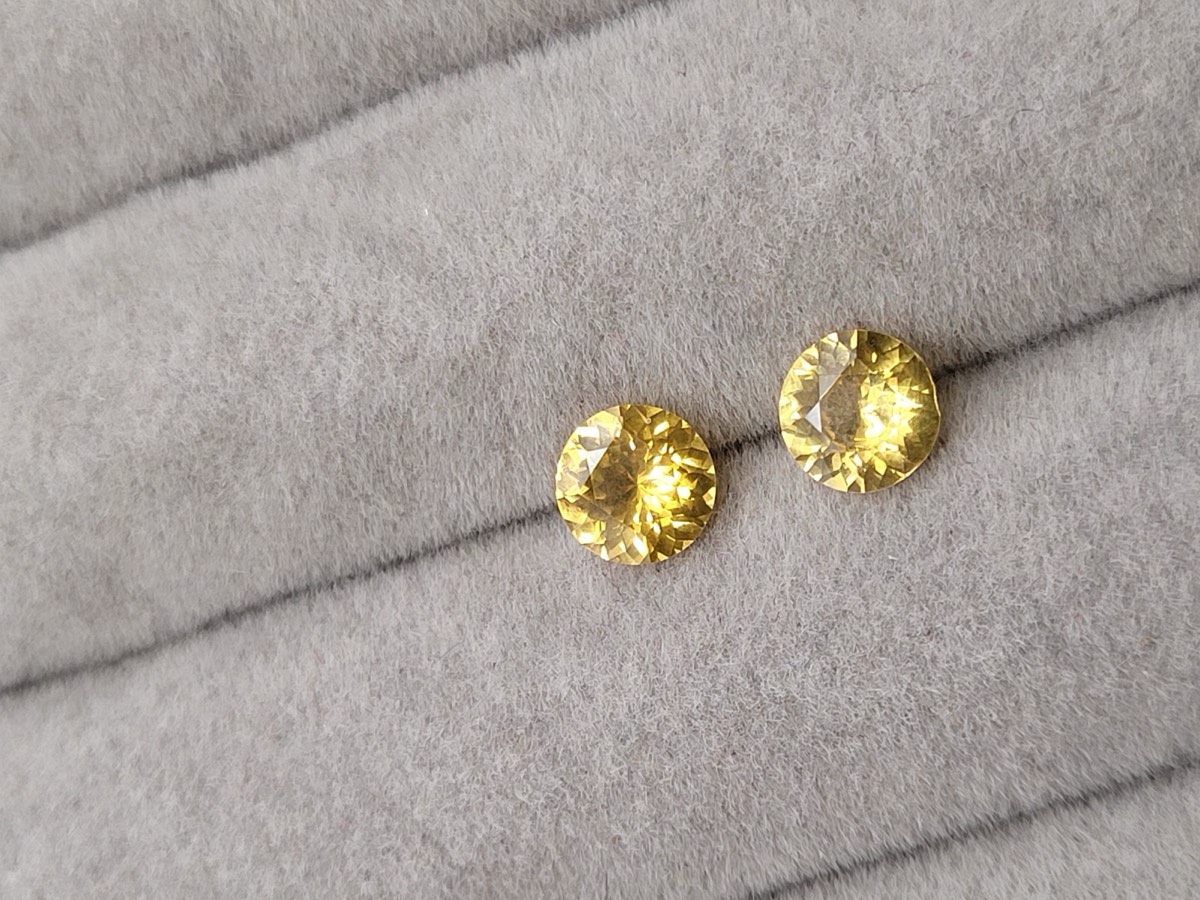
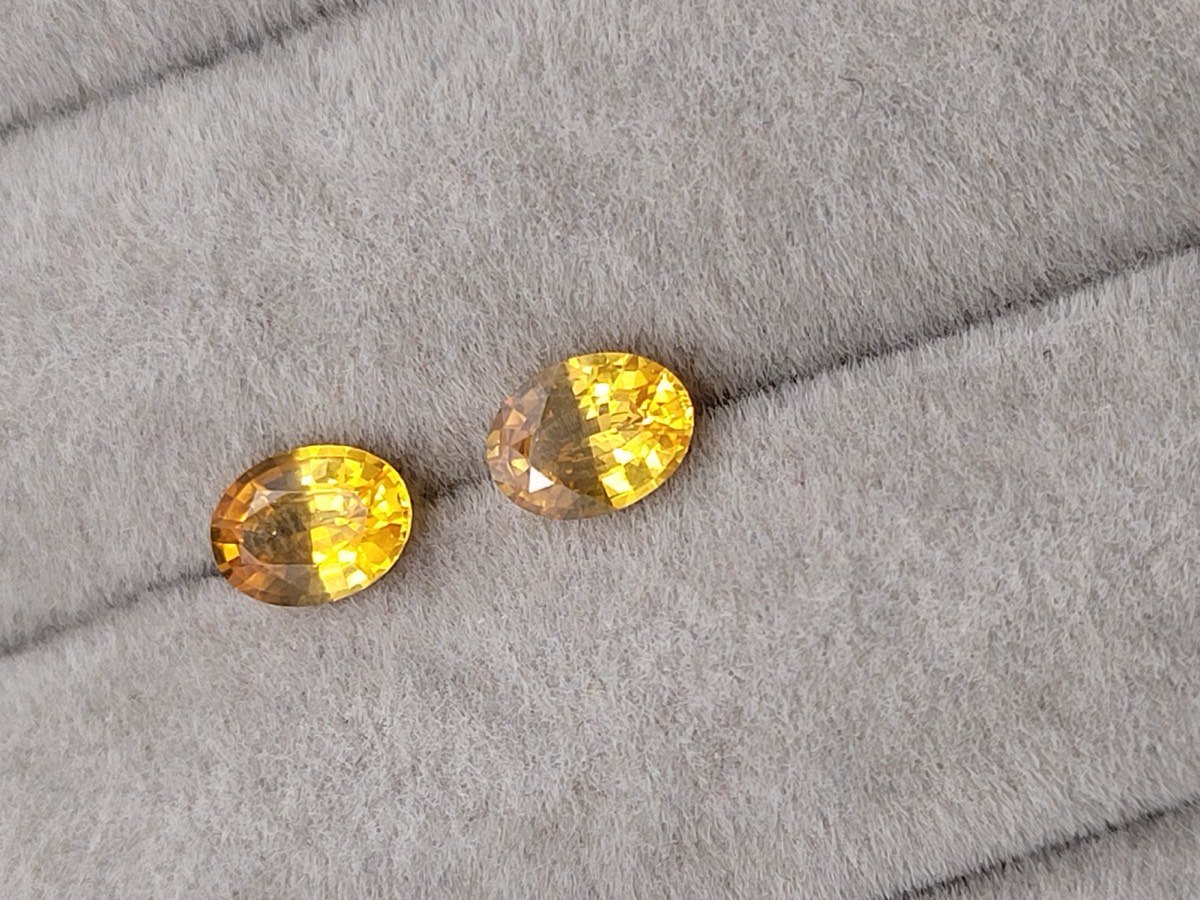
A pair is not two stones that happen to be the same colour. It is a deliberate assembly, it costs more than the sum of its parts, and the reason is worth understanding before you pay for one.
Why a pair costs more than two singles
Sapphire comes out of the ground one stone at a time. Two stones that agree closely in colour, tone, saturation, size, outline and cut did not arrive together — someone searched for the second one, often through a great many stones, and held the first while looking.
That search is the cost. A pair typically carries a premium over two unrelated stones of the same total weight, and the premium rises steeply with size, because the pool to search shrinks as stones get larger.
The six things that have to agree
- Hue — including any secondary lean. One stone leaning violet next to one leaning pure blue will read as a mismatch even if both are lovely.
- Tone — one visibly lighter than the other is the most common failure, and the most obvious once set.
- Saturation — a greyer stone beside a cleaner one shows immediately.
- Size — face-up millimetres, not carat weight. Two stones of equal weight can differ visibly across the face.
- Outline — length-to-width ratio especially. Two ovals of different proportions never settle.
- Cut and facet style — they should return light the same way, or one will look livelier than the other under the same lamp.
Orientation: the one nobody mentions
Sapphire is pleochroic, which means it shows slightly different colour from different crystal directions. A well-assembled pair is oriented so that both stones present the same direction face-up.
This matters at setting time. Tell your jeweller the stones are a matched pair before any work starts, so they are set as a set and oriented consistently rather than dropped into whichever seat they fit. It is a thirty-second conversation that protects the premium you paid.
How to check a pair
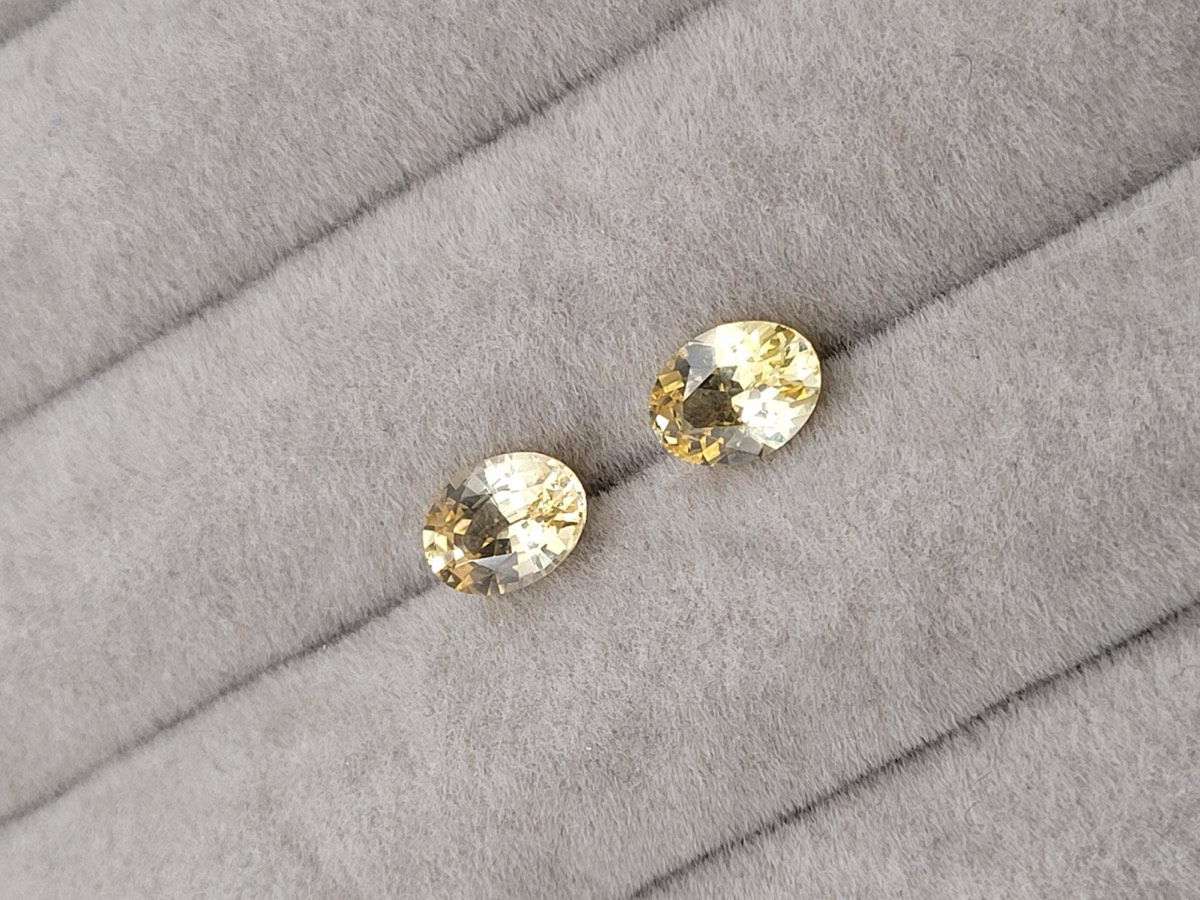
- See them together, in one light, in one photograph. Two separate images taken minutes apart prove nothing — exposure drifts. Every pair here is photographed as a pair for that reason.
- Look face-up and in profile. Depth differences do not show from above, but they decide how the stones sit in a mounting.
- Swap their positions and look again. If one suddenly looks better than the other, they are not as matched as they appeared.
- Ask for the millimetre dimensions of each stone separately.
What pairs are for
- Earrings — the obvious use, and the one where mismatches are least forgiving: the two stones are seen together but never adjacent, so the eye compares from memory.
- Three-stone rings — a centre stone flanked by a pair. Here the match is under maximum scrutiny, since all three sit side by side.
- Cufflinks and symmetrical settings — anything where two stones appear in mirrored positions.
For a three-stone ring, choose the pair after the centre stone, and take the centre stone to the pair rather than the other way round. Flanking stones are easier to find than centres.
Keep reading
Why Ceylon
Two thousand years of sapphire from a single island, and what makes the material distinct.
Heated vs Unheated
What heat treatment actually is, why it is disclosed, and what the premium buys you.
How to Buy a Sapphire
Colour, cut, clarity and carat — in the order that actually matters for coloured stones.